Mostrando entradas con la etiqueta Zaragoza. Mostrar todas las entradas

martes, 29 de septiembre de 2015

Una revolución antifeudal / An antifeudal revolution


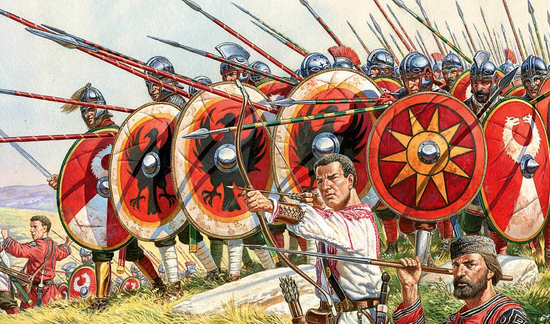
La bagauda fue una militarización social contra la depredación estatal, la corrupción y el aumento de poder los grandes propietarios. La insoportable presión fiscal, la crisis imperial y la concentración de propiedades en manos de los terratenientes hizo mella en el campesinado libre y en parte de la ciudadanía de época tardorromana. En Galia y en Hispania, muchos de estos campesinos se unieron en grupos de bandidos o guerreros que se echaron a los caminos para conseguir por la fuerza los bienes que necesitaban para vivir y para tratar de luchar contra el yugo de un sistema que les condenaba a la pérdida de sus tierras, a la servidumbre de los nuevos propietarios feudales o la miseria en las ciudades. Según Orosio: "Prefirieron soportar la libertad con pobreza entre los bárbaros que la preocupación por el pago de los tributos entre los romanos".

Aunque el fenómeno se inició en el siglo III en Armórica, no sería hasta bien entrado el siglo V en que los bagaudas se convertirían en uno problema clave en Hispania. En 441 d.C., solo la provincia Tarraconense era fiel a la autoridad romana. El resto de la península estaba en la práctica en manos de los suevos. Los romanos no podían contratacar porque la bagauda, al parecer procedente del valle medio del Ebro, asolaba sus tierras. El Imperio envió al afamado general Asturio, con tropas de infantería y caballería, y, dos años después, a Flavio Merobaudes. Ninguno de los dos consiguió grandes éxitos, a pesar de las represiones. Y es que en 449, suevos y bagaudas llegaron a aliarse para saquear Cesaraugusta (Zaragoza) e Ilerda (Lleida), bajo el mando del rey Requiario y del general Basilio, único jefe bagauda que Hidacio menciona en sus crónicas. En 454, los bagaudas mataron a federados visigodos en Tarazona e hirieron al obispo de León. Sus correrías terminaron en la península cuando visigodos, al mando del general Federico, y magnates hispanorromanos pactaron una campaña común contra este movimiento, que finalmente depuso las armas y se doblegó al proceso de feudalización social.

Facebook
-------------------------------------------------------------------------------------------------------------------------

Bagaudae was a social militarization against the state predation, the corruption and the power of the landlords. The unbearable tax burden, the imperial crisis and the concentration of land ownership has a major impact in free peasantry and in a large section of the Late Roman Empire citizenship. In Gaul and Hispania, a lot of these peasants created gangs of bandits or warriors took to the road to get by force the goods they needed to live and trying to fight against a system that condemned them to lose their lands, become servants of the new feudal land owners or the misery in the cities. According to Paulus Orosius: "They preferred bear freedom with poverty amongst Barbarians than the fear because of the tax payment amongst Romans".

Although the phenomenon started in III century a.C. in Armorica, it wasn't until V century a.C. when Bagaudae would become a major problem in Hispania. In 441 a.C., only province of Tarraconensis was loyal to the Roman authority. The rest of the peninsula was in practice under the rule of Suebi kingdom. Romans couldn't counter-attack because Bagaudae, apparently from middle valley of the river Ebro, devastated their lands. Empire sent the famous general Asterius, with infantry and cavalry troops and, two years later, the general Flavius Merobaudes. None of them succeeded, despite the repression. In 449 a.C. , Suevi and Bagaudae became allies to plunder Caesaraugusta (Zaragoza) and Ilerda (Lleida), under the command of king Rechiar and general Basilius, the unique Bagaudian chieftain that Hidatius mention in his chronicles. In 454 a.C., Bagaudae killed Visigothic foederati in Tarazona and wounded the bishop of León. Their raids ended in the peninsula when Visigoths, under the command of Frederick, and Hispanic Roman land owners agreed to join a campaign  against this social movement, that finally laid down their arms and humbled itself to the social feudalization process.

@enriquevdiez
Facebook
My English is not very good. I'm trying to improve it. If you find any errors in the text, please write to me (enriquevdiez@gmail.com). Thank you very much.

martes, 16 de septiembre de 2014

Himnos de España (I): El himno andalusí / Spanish hymns (I): The Andalusian hymn


Algunos musicólogos defienden que la obertura instrumental del movimiento Dary de la Nuba al-Istihlál es el origen del himno de España, aunque no hay estudios científicos que sustenten tal afirmación. Existen varias tesis sobre su origen. La más extendida es que esta pieza pertenece a la tradición musical andalusí de Marruecos. No obstante, hay expertos que defienden que la partitura es obra del filósofo de Saraqusta (Zaragoza) Ibn Bayyah (Avempace), que vivió en dicho reino de taifa entre los siglos XI y XII.


------------------------------------------------------------------------------------------------------------
Palace of the Aljafería (Zaragoza).

Many musicologists defend that the instrumental oberture of the movement Dary of the Nuba al-Istihlál is the origin of the Spanish hymn, although there are no scientific studies to base this assertion. There are several theories about its origin. The most common is that this piece belongs to the Moroccan Andalusian musical tradition. Nevertheless, there are experts who argue that the author of the original score is the phylosopher of Saraqusta (Zaragoza) Ibn Bâjja (Avempace) who lived in that taifa kingdom between XI and XII centuries.


@enriquevdiez
Facebook
My English is not very good. I'm trying to improve it. If you find any errors in the text, please write to me (enriquevdiez@gmail.com). Thank you very much.

martes, 11 de marzo de 2014

El calendario del general / The general's calendar

Yacimiento de Segeda I en Mara (Zaragoza)

En 153 aC., el Senado romano mandó a Hispania al cónsul Quinto Fulvio Nobilior para resolver un conflicto con la ciudad de Segeda, que había ampliado su muralla sin permiso romano (aunque no sirvieran de nada las razonables explicaciones de los segedanos, reflejadas en la 'Iberiké' de Apiano). Entonces, los cónsules tomaban posesión en los idus de marzo, fecha considerada el inicio del año. Pero, como las tierras hispanas estaban muy lejanas, las tropas no iban a estar listas para luchar hasta otoño, con lo que se desaprovecharía la temporada estival. Así, el Senado decidió cambiar el inicio del año al 1 de enero, penúltimo mes del año hasta entonces (septiembre significa séptimo mes; octubre, octavo mes; noviembre, noveno mes; diciembre, décimo mes), conciliando el 'Mos Maiorum' romano con sus intereses económico-militares.

En el siglo II dC. la Iglesia adoptó este sistema de datación denominándolo de gracia o de circuncisión (se consideraba que Jesucristo había sido circuncidado a principios de enero). Sin embargo, solo Castilla mantuvo este orden (en Italia empezaba el año en la Natividad -25 de diciembre-; en Bizancio, el 1 de septiembre -Indictio graeca-; en Inglaterra, Alemania y Francia, el 24 de septiembre -Indictio bedana o cesarea-; también en Francia se inició en un período el domingo de Resurrección; en Venecia, el 1 de marzo; en Florencia, el 25 de marzo -Encarnación de Jesucristo-; en Siena, el 18 de septiembre -Indictio sienense-...). El orden mensual se generalizó a partir del siglo XV, cuando progresivamente los estados europeos fueron adoptando el calendario que se había establecido 17 siglos antes para que un general pudiese llegar a tiempo a una guerra.

@enriquevdiez
------------------------------------------------------------------------------------------------------------
Site of Segeda I, Mara (province of Zaragoza)

In 153 bC, Roman Senate sent consul Quintus Fulvius Nobilior to Hispania to solve a conflict with the city of Segeda, which had increased its walls without Roman permission (despite the Segedan reasonable explanations reflected in Appian's 'Iberiké'). Then, consules took office in the Ides of March, a date considered the beginning of the year. But Hispania was too far and troops weren't going to be prepared to fight until autumn, missing the summer season. The Senate decided to proclaim the first day of January, the penultimate month until then (September means seventh month; October, eighth month; November, ninth month; December, tenth month), as the year's start, blending the Roman 'Mos Maiorum' with its economic-military interests.

In the II aC century, Church adopted this dating system denominating it 'of grace' or 'of circumcision' (it was considered that Christ had been circumcised in the beginning of January). Nevertheless, only Castile kept this order (in Italy, year began in Nativity -December 25th-; in Byzantium, 1st September -Indictio Graeca-; in England, Germany and France, 24th September -Indictio Bedana or Caesarea-; also in France it was begun during a period in the Resurrection Sunday; in Venice, 1st March; in Florence, 25th March -Christ's embodiment-; in Siena, 18th September -Indictio Sienense-...). The monthly order was spread since XV century, when European states adopted progressively the calendar which had been established 17 centuries ago to allow a general to arrive in a war on time.

@enriquevdiez
My english is not very good. I'm trying to improve it. If you find any errors in the text, please write to me (enriquevdiez@gmail.com). Thank you very much.